Brink of Chaos: USA, Iran, Israel Stare Into the Abyss (June 2026)
The 'shadow war' is over. Overt missile strikes between Iran and Israel have pushed the Middle East to the brink. With the US on high alert, we analyze the path to war and the desperate search for a ceasefire in June 2026.
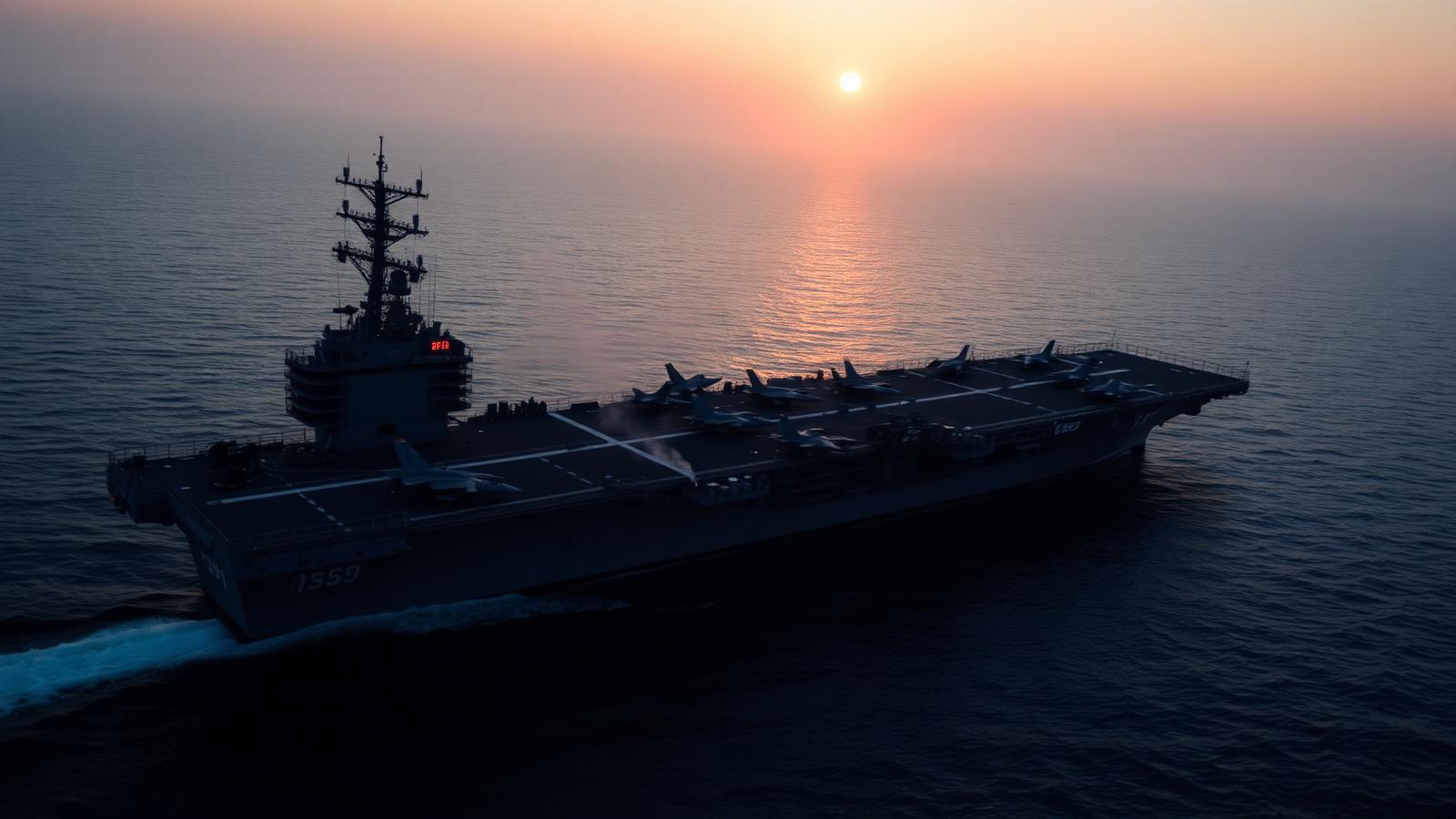
From Shadow War to Open Fire: A Region on High Alert
The simmering conflict that has defined the Middle East for decades has finally boiled over. In June 2026, the long-dreaded direct confrontation between Iran and Israel is no longer a theoretical scenario for military colleges; it's the stark reality flashing across news tickers from Tel Aviv to Tehran. The so-called 'shadow war' fought with proxies, cyber-attacks, and assassinations has given way to overt, state-on-state military strikes. This dramatic escalation has put the United States, under the second Trump administration, in one of its most precarious foreign policy positions in recent history. The world now holds its breath, watching the latest news from a potential full-scale Middle East war and desperately hoping for an Israel-Iran ceasefire.
This in-depth analysis breaks down the latest Israel-Iran conflict update, examining the key players, the military and nuclear stakes, the economic fallout, and the frantic diplomatic scramble to pull the region back from the abyss. The core question on everyone's mind: can a devastating regional war be averted, or is it already too late?
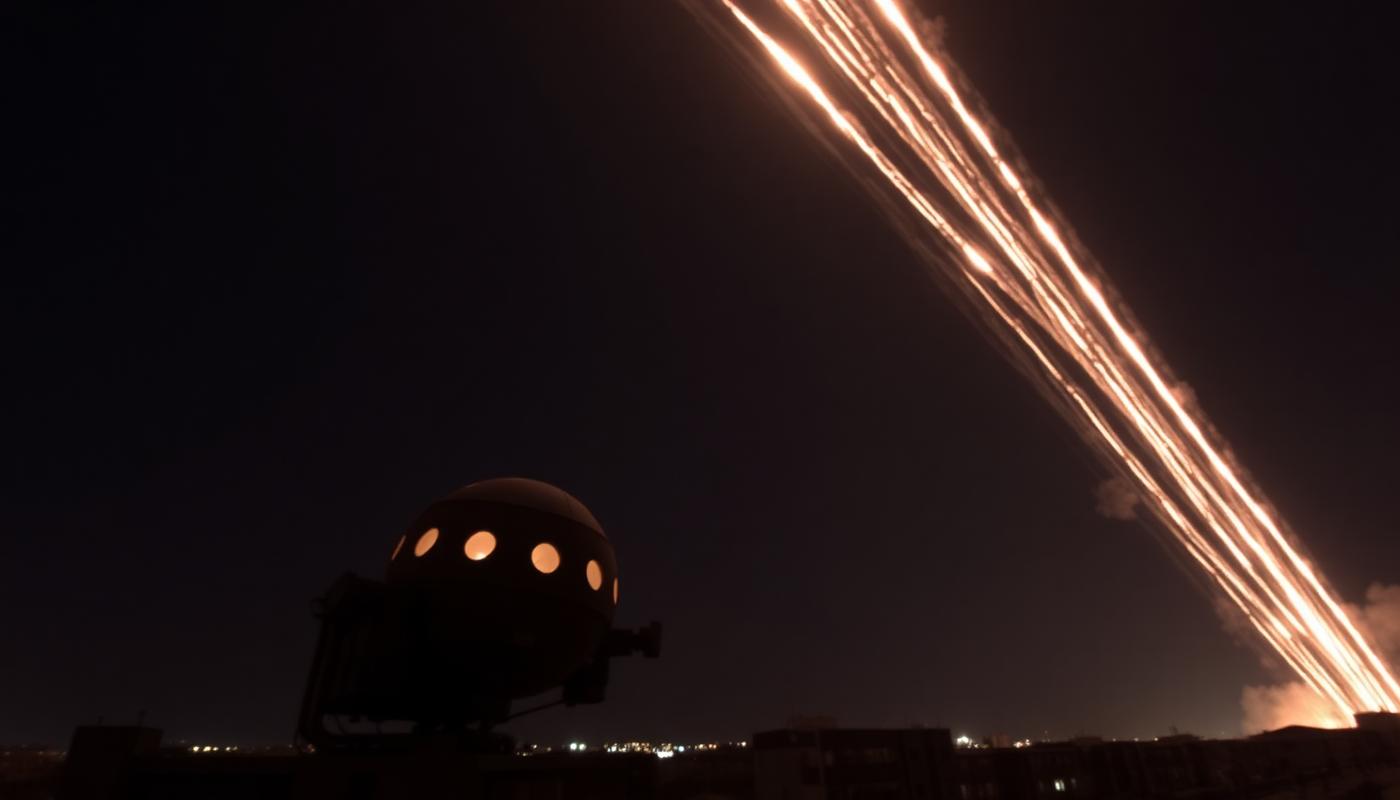
A Decades-Long Rivalry Ignites
The road to June 2026 has been paved with broken treaties, escalating rhetoric, and proxy bloodshed. Following the United States' final withdrawal from any semblance of the Joint Comprehensive Plan of Action (JCPOA) in 2025, Iran accelerated its nuclear activities. The International Atomic Energy Agency (IAEA) reported in early 2026 that Iran had amassed a significant stockpile of uranium enriched to 60%, a short technical step from weapons-grade material. Director General Rafael Grossi, in a grave statement to the press, warned that the IAEA's visibility into the Iran nuclear program 2026 was 'severely compromised.'
For Israel, this was the crossing of a red line. Prime Minister Yair Lapid's national unity government, which includes hardline elements from the Likud party, had repeatedly stated that a nuclear-capable Iran was an existential threat that would be neutralized 'by any means necessary.' Throughout 2025 and into 2026, a series of mysterious explosions at Iranian military and nuclear-related sites, widely attributed to Israel, heightened the USA Iran tensions. Iran, in turn, escalated its support for proxies like Hezbollah in Lebanon and the Houthis in Yemen, creating a ring of fire around Israel and strategic choke points.
What Just Happened: The Escalation Ladder's Top Rung
The current crisis erupted on June 15, 2026.
- The Cyber Pearl Harbor: A massive, sophisticated cyberattack crippled sections of Israel's power grid and water desalination plants for several hours. Israeli officials, in a press conference reported by the Associated Press, presented what they called 'irrefutable evidence' of the attack originating from units associated with Iran's Islamic Revolutionary Guard Corps (IRGC). Cyber Command Chief, Major General Eyal Shani, called it 'the most significant cyber-assault on a sovereign nation to date.'
- Israel's Retaliation: Within 48 hours, Israel responded. In a daring, long-range operation, Israeli F-35I Adir stealth fighters struck a major IRGC command and control center near Isfahan, as well as a key drone manufacturing plant. The Israeli Defense Forces (IDF) released satellite imagery claiming the strike was precise and avoided civilian casualties, a claim Iran vehemently denies. An IDF spokesperson stated, 'We have moved from mowing the lawn to uprooting the weed.'
- Iran's Direct Response: The 'shadow war' ended at that moment. For the first time ever, Iran launched a direct, unconcealed military strike against the state of Israel. As reported by Al Jazeera and Reuters, between 150 and 200 ballistic missiles, cruise missiles, and suicide drones were launched from Iranian territory. While Israel's multi-layered air defense system—comprising the Iron Dome, David's Sling, and Arrow systems—reportedly intercepted over 95% of the threats, a handful got through. A missile fragment struck a residential area in Beersheba, causing several casualties, and another hit near Nevatim Airbase in the Negev desert.
This exchange marked a paradigm shift. The unwritten rules of engagement were shattered. The Iran Israel war 2026 was no longer a hypothetical search term; it was a live event.
The Key Players: A Triangle of Mistrust
Understanding the motivations and constraints of the three central actors is crucial to grasping the gravity of the situation.
Iran: Defiance and Brinkmanship
For Tehran's hardline government, the direct strike on Israel was a culmination of its 'strategic patience' policy. Having weathered years of sanctions and covert attacks, the leadership under Supreme Leader Ali Khamenei likely felt it had to re-establish deterrence. Domestically, the attack is being framed as a powerful defense of national sovereignty against Zionist aggression. State television has been broadcasting patriotic songs and images of military might. However, Iran's leaders are walking a tightrope. They know a full-scale war with both Israel and potentially the United States would be devastating for the country. Their strategy is likely to demonstrate capability without triggering an overwhelming response, a dangerous miscalculation many analysts fear they have already made.
Israel: Existential Threat, Aggressive Defense
From the Israeli perspective, the Iranian missile barrage was a confirmation of its deepest fears. The national psyche is now one of 'never again,' a sentiment echoed across the political spectrum. The Lapid government is under immense pressure to deliver a decisive blow that cripples Iran's offensive capabilities and irrevocably sets back its nuclear program. The debate in the war cabinet, as reported by Israel's Channel 12 News, is not if to respond, but how and how hard. Options range from a massive cyber-offensive and strikes on proxy forces to the most dangerous course of action: a preemptive strike on Iran's nuclear facilities, an action that would almost certainly ignite a region-wide Middle East war.
The United States: The Reluctant Superpower
The US Iran news today is dominated by the moves of the Trump administration. President Donald Trump, who campaigned on ending 'endless wars' but also on projecting 'peace through strength,' faces a dilemma. His administration's 'maximum pressure' campaign is seen by some as a direct cause of the current crisis. Now, he must balance unequivocal support for his key ally, Israel, with the strategic objective of avoiding American entanglement in another major conflict.
Secretary of State J.D. Vance stated in a press briefing, 'We stand shoulder-to-shoulder with Israel and its right to defend itself. All options are on the table to prevent Iran from destabilizing the region.' The threat of a Trump Iran strike looms large, but its form is uncertain. Will it be limited and punitive, or a prelude to a larger campaign? The Pentagon has announced the deployment of the USS Gerald R. Ford carrier strike group to the Eastern Mediterranean and bolstered its air assets in the Gulf, clear signals to Tehran. For the latest in how technology is changing geopolitical landscapes, check out our insights on AI news and trends.
The Military and Nuclear Dimension
The military balance is complex and fraught with peril. Iran possesses a massive arsenal of ballistic and cruise missiles, a fleet of drones, and a network of well-armed proxies that can threaten Israeli population centers and global shipping lanes. As detailed by a recent report from the Council on Foreign Relations, Iran's strategy relies on asymmetric warfare to counter Israel and the US's technological superiority.
Israel, on the other hand, boasts one of the most advanced, technologically sophisticated militaries in the world, with undeniable air superiority and a cutting-edge intelligence apparatus. The critical unknown remains the true status of the Iran nuclear program 2026. If Israel believes Iran is on the precipice of assembling a bomb, its calculation for a preemptive strike changes dramatically. Such a strike would be incredibly complex, requiring multiple waves of aircraft, aerial refueling, and suppression of Iran's air defenses. The consequences of failure—or even success—are terrifying to contemplate.
Economic Shockwaves: Oil Prices and Global Markets
The immediate impact of the direct hostilities was felt in the global markets. Brent crude oil prices spiked over 15% in 24 hours, surging past $120 a barrel for the first time since the early 2020s. The Strait of Hormuz, through which nearly a fifth of the world's oil supply passes, is now a high-risk zone, with maritime insurance premiums skyrocketing.
A prolonged conflict could trigger a global energy crisis and a severe recession. European and Asian economies, heavily reliant on Middle Eastern energy, would be hit hardest. In the US, rising gas prices are already becoming a major political issue for the Trump administration. The economic fallout is a powerful incentive for de-escalation, but it may not be enough to override the national security imperatives in Tehran and Tel Aviv.
Diplomatic Scramble for an Israel-Iran Ceasefire
The international community has responded with alarm. An emergency session of the UN Security Council devolved into acrimony, with the US and UK ambassadors trading barbs with their Russian and Chinese counterparts. The BBC has reported on frantic, behind-the-scenes diplomatic efforts by European powers, as well as Qatar and Oman, to establish backchannels and mediate a ceasefire.
- The UN: Secretary-General António Guterres has pleaded for 'maximum restraint,' warning of 'a full-scale regional war with devastating consequences for the world.'
- The EU: The European Union is attempting to carve out a role as a neutral mediator, but its leverage is limited.
- Russia and China: Both nations have called for calm but have largely blamed US policy for the crisis. They see the USA Iran tensions as an opportunity to diminish American influence in the region, but they are also wary of a major war that would disrupt their economic interests.
The key to any Israel Iran ceasefire lies in Washington, Tel Aviv, and Tehran. Can a formula be found that allows both sides to claim victory and step back from the brink? As of late June 2026, the answer is far from clear.
Expert Analysis: On the Knife's Edge
We spoke to several geopolitical analysts for their take on the Israel-Iran conflict update.
Dr. Elara Vance, a senior fellow at the London Institute for Strategic Studies, believes the situation is 'the most dangerous moment in the Middle East since the 1973 Yom Kippur War.' She tells AItoolio, 'The shadow war provided a degree of plausible deniability that has been completely obliterated. Now, national prestige and leadership survival are on the line for all sides, making de-escalation incredibly difficult. Both Iran and Israel have demonstrated new capabilities and a new willingness to use them.' For more on how our team at AItoolio stays ahead of global events, visit our homepage.
Meanwhile, former Pentagon official Michael Corrigan, now with the Washington Security Forum, focused on the US role. 'The Trump administration is caught in a trap of its own making. Its hardline rhetoric emboldened Israel and cornered Iran. Now, a US President who wants to avoid foreign wars may be forced to order a Trump Iran strike to either protect an ally or reassert American deterrence. The potential for miscalculation is astronomically high.' He notes that many teams in Washington are currently trying to find an edge by using the best AI productivity tools of 2026 to model outcomes.
What to Watch Next
As the world follows the Middle East war latest news, several key indicators will determine whether the region slides into a wider conflict or pulls back.
- Israel's Response: Will the next Israeli action be rhetorical, covert, or another massive, overt strike? A strike on nuclear facilities would be the point of no return.
- US Military Posture: Watch for carrier movements, bomber deployments, and troop level announcements. These will signal American intent and readiness.
- The Strait of Hormuz: Any attempt by Iran to disrupt or close this vital shipping lane would immediately globalize the conflict and likely trigger a direct US military response.
- Hezbollah's Actions: If Iran's most powerful proxy, Hezbollah, opens a second front on Israel's northern border with its vast missile arsenal, a regional war is all but guaranteed.
Key Takeaways
- The 'shadow war' between Iran and Israel is over, replaced by direct state-on-state military strikes, marking a new and dangerous phase.
- Israel and Iran are locked in an escalation spiral, with each side feeling compelled to respond to the other's actions, risking a full-scale regional war.
- The Trump administration faces a critical dilemma: how to support Israel and deter Iran without being drawn into a major Middle East war.
- The Iran nuclear program 2026 remains the central point of contention, with its advanced state driving Israeli security concerns to a fever pitch.
- Global oil markets and economies are already suffering, and a wider conflict would have devastating worldwide consequences.
FAQ
What is the latest on the US Iran news today?
As of June 24, 2026, the latest US-Iran news centers on the Trump administration's response to the direct Iran-Israel clashes. The US has deployed significant military assets to the region as a show of force and is providing intelligence and defensive support to Israel, while publicly calling for de-escalation and privately engaging in frantic diplomacy.
Is an Israel-Iran ceasefire likely?
A ceasefire is the top diplomatic priority but remains difficult. Both sides need a way to 'de-escalate with honor,' which is challenging given the direct attacks. A ceasefire would require intense pressure from the US and other world powers, along with face-saving guarantees for both Tehran and Tel Aviv.
Has there been a Trump Iran strike?
As of now, the US has not conducted a direct military strike on Iran in this current crisis. However, the term 'Trump Iran strike' is a major point of discussion, as President Trump has stated 'all options are on the table.' Any US strike would likely be a response to a direct attack on US forces or a move by Iran to close the Strait of Hormuz.
What is the status of the Iran nuclear program in 2026?
According to international monitors and intelligence agencies, the Iran nuclear program in 2026 has significantly advanced. Iran possesses a large quantity of uranium enriched to 60%, and the 'breakout time'—the time needed to produce enough weapons-grade material for one bomb—is estimated to be a matter of weeks, if not days. This is the primary driver of the current crisis.
Conclusion: A Moment of Peril
The world is watching the USA Iran tensions and the Iran Israel war of 2026 with profound anxiety. The pieces on the chessboard are moving at a terrifying speed, and the players are operating under immense pressure, with ideologies and national survival on the line. For decades, the prospect of a direct war between Iran and Israel was a nightmare scenario. Today, it is a waking reality. The coming days will be critical, testing the limits of diplomacy, the resolve of leaders, and the world's collective ability to step back from the brink of a catastrophic conflict that would reshape the Middle East and the world for decades to come.
Stay informed with AItoolio as we continue to provide neutral, in-depth analysis on this and other critical global developments. Subscribe to our newsletter and leave your thoughts in the comments below.
Keep reading

The Brink in 2026: Navigating the Iran-Israel War
As the world watches anxiously, the Iran-Israel conflict of 2026 escalates, drawing in the United States and threatening global stability. This is a deeply human look at the war's true cost and the perilous road ahead.

F1 2026: New Rules, New Cars, and Who Will Win the Championship
F1 2026 isn't just an update; it's a revolution. With radical new cars, 50/50 power units, and active aero, the grid is set for its biggest shake-up since 2014. Who will master the chaos and claim the crown?

AI GLM 5.2 That Beats Claude Fable 5: A New Era of LLM Dominance
GLM 5.2 has arrived, and it's officially outperforming Claude Fable 5 in coding, math, and long-context retrieval. Explore the technical breakthroughs behind Zhipu AI's new powerhouse.