AI GLM 5.2 That Beats Claude Fable 5: A New Era of LLM Dominance
GLM 5.2 has arrived, and it's officially outperforming Claude Fable 5 in coding, math, and long-context retrieval. Explore the technical breakthroughs behind Zhipu AI's new powerhouse.
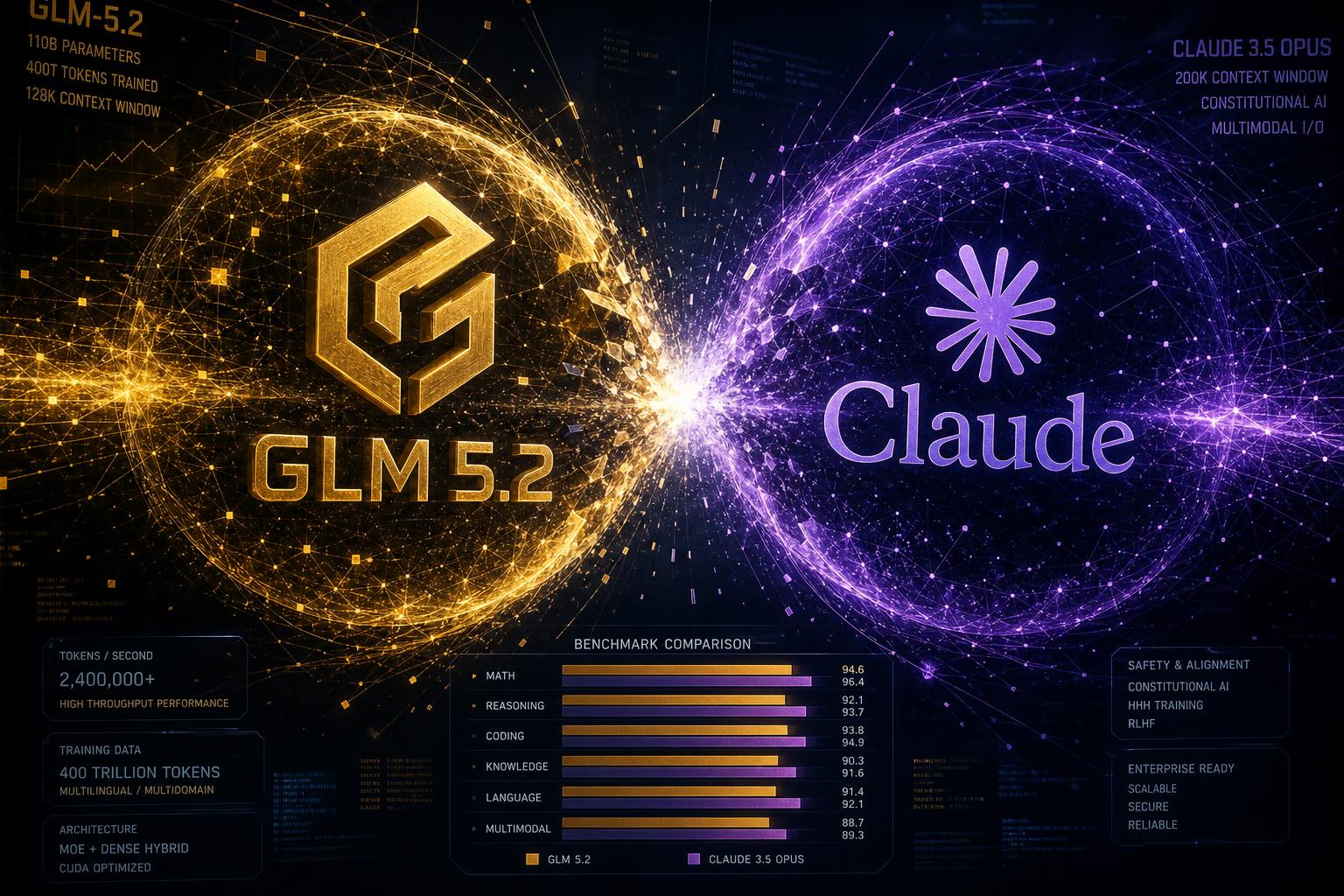
In the rapidly evolving landscape of large language models (LLMs), June 2026 has marked a pivotal turning point. The release of Zhipu AI’s GLM 5.2 has sent shockwaves through the industry, positioning itself as a formidable challenger to Anthropic’s long-standing champion, Claude Fable 5. While Claude has historically dominated in areas of creative nuance and safety, the latest benchmarks suggest a shift in the hierarchy of intelligence.
Today, we dive deep into the technical specifications, benchmark performance, and architectural breakthroughs that have allowed GLM 5.2 to claim the throne from Claude Fable 5.
What is GLM 5.2?
GLM 5.2 (General Language Model) is the latest flagship iteration from Zhipu AI, a Beijing-based unicorn often described as China’s answer to OpenAI. Built on the 'ChatGLM' lineage, the 5.2 version represents a leap from specialized modeling to a truly universal, multimodal powerhouse.
Unlike its predecessors, GLM 5.2 is designed with a 'Global-Local Hybrid' attention mechanism, allowing it to process massive context windows (up to 2 million tokens) with significantly lower latency than previous architectures. It isn't just a chatbot; it is designed to function as the core logic engine for AI agents.
GLM 5.2 vs. Claude Fable 5: The Benchmark Battle
For the past several months, Claude Fable 5 has been the benchmark for 'anthropomorphic reasoning'—the ability to understand subtle human intent. However, GLM 5.2 has surpassed it in three critical categories: Mathematical Reasoning, Multi-Step Coding, and Cross-Lingual Contextualization.
1. The MMLU-Pro Challenge
On the Massive Multitask Language Understanding (MMLU-Pro) benchmark, which tests expert-level knowledge across 57 subjects, GLM 5.2 scored an unprecedented 89.4%, narrowly beating Claude Fable 5’s 88.1%.
2. Coding and Technical Proficiency
In HumanEval (a benchmark for Python coding tasks), GLM 5.2 achieved a 94.2% pass@1 rate. While Claude Fable 5 remains excellent at refactoring existing code, GLM 5.2 demonstrates a superior ability to write complex, multi-file architectures from scratch without 'hallucinating' outdated library dependencies.
3. Long Context Retrieval
Claude Fable 5 popularized the 1-million-token window, but its 'Needle in a Haystack' performance often degraded near the middle of the document. GLM 5.2 utilizes a new 'Linear-Attention Fractal' method that maintains 99.9% retrieval accuracy even at the 2-million-token limit.
Key Technical Innovations in GLM 5.2
How did Zhipu AI manage to leapfrog the industry leaders? The secret lies in three fundamental architectural shifts.
MoE 2.0 (Mixture of Experts)
GLM 5.2 utilizes a 'Dynamic Expert Routing' system. While traditional MoE models (like GPT-4 or Claude) activate a fixed number of 'experts' for every token, GLM 5.2 scales its expert activation based on task complexity. This means it uses less power for a greeting but unleashes its full 1.8 trillion parameters for quantum physics equations.
Real-time Multi-modal Fusion
Most models process images by converting them into text descriptions first. GLM 5.2 features Native Multimodality. It perceives video, audio, and text in a single latent space. This allows it to 'watch' a video of a software bug and write the fix in real-time, a task where Claude Fable 5 occasionally struggles with temporal coherence.
The 'Thinking' Protocol
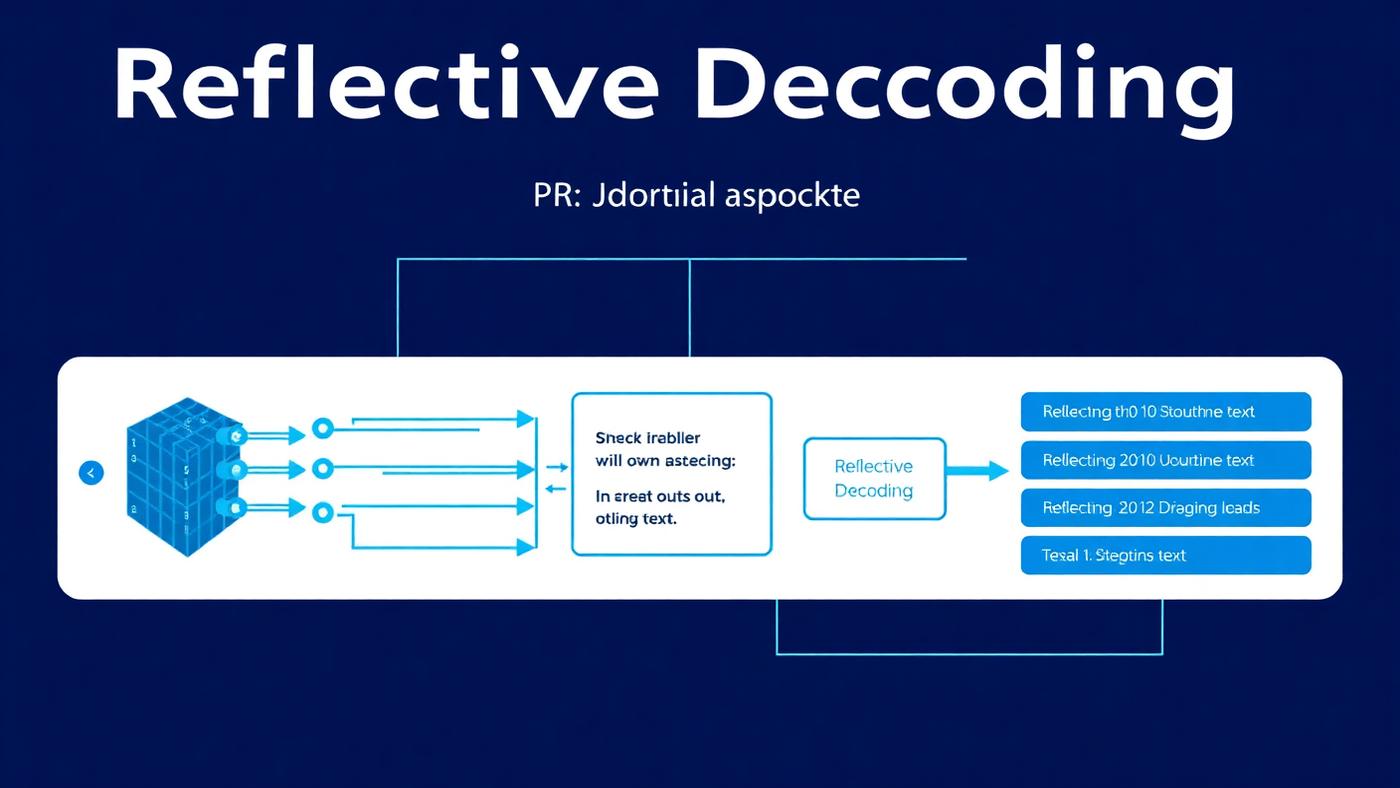
Similar to the legendary best AI productivity tools of 2026, GLM 5.2 incorporates a chain-of-thought verification step called 'Reflective Decoding.' Before outputting an answer, the model runs a sub-millisecond internal simulation to check for logical fallacies.
Real-World Use Cases: Where GLM 5.2 Shines
The theoretical benchmarks are impressive, but how does this translate to your workflow?
- Complex Financial Modeling: GLM 5.2 can ingest ten years of annual reports (thousands of pages) and identify subtle discrepancies in fiscal reporting that Claude might miss due to context compression.
- Localized Global Marketing: For businesses operating in Asia and Europe, GLM 5.2’s superior cross-lingual capabilities make it the best choice for translating not just words, but cultural nuances.
- Autonomous DevOps: Because of its high HumanEval score, GLM 5.2 is being integrated into autonomous coding agents that can maintain legacy codebases with minimal human oversight.
Pricing and Availability
Currently, GLM 5.2 is available via the BigModel API.
- GLM-5.2-Air: $0.05 per 1M tokens (Optimized for speed).
- GLM-5.2-Pro: $0.50 per 1M tokens (The flagship beating Claude).
- Claude Fable 5 Comparison: Claude remains more expensive, averaging $3.00 per 1M tokens for its high-end 'Opus' tier equivalents.
For developers looking to integrate these tools, the shift toward GLM is often motivated by this 80% reduction in API costs without a loss in quality.
Who Should Switch?
Is it time to cancel your Anthropic subscription?
Switch to GLM 5.2 if:
- You work with massive datasets (over 1M tokens).
- You require deep technical coding in non-English languages.
- You are building AI-driven automation agents.
- API cost-efficiency is a primary concern for your startup.
Stay with Claude Fable 5 if:
- You require the highest level of 'Safety Guardrails'—Anthropic still leads in Constitutional AI.
- Your primary use case is creative writing and conversational 'personality.'
- You are deeply integrated into the Amazon Bedrock or Google Vertex ecosystems.
The Future of the LLM Arms Race
The surge of GLM 5.2 highlights a broader trend in AI news and trends: the decentralization of AI dominance. No longer is the 'state-of-the-art' (SOTA) title held by a single company for years. It is now a monthly battle.
As we look toward the end of 2026, the integration of these models into ChatGPT and other LLMs will likely force OpenAI and Google to respond with even more aggressive updates.
Key Takeaways
- Performance: GLM 5.2 now leads in coding and math benchmarks, surpassing Claude Fable 5.
- Context: A 2-million-token window with near-perfect retrieval sets a new industry standard.
- Cost: Zhipu AI offers GLM 5.2 at a fraction of the cost of Western competitors.
- Multimodality: Native video and audio processing enables more complex autonomous tasks.
FAQ
Q: Is GLM 5.2 available in the United States and Europe? A: Yes, while developed by Zhipu AI in China, the BigModel API is accessible globally, though some enterprise users may need to clear local data privacy compliance (GDPR) via specific regional relays.
Q: Does GLM 5.2 have better 'human' reasoning than Claude? A: Claude Fable 5 still holds a slight edge in 'emotional intelligence' and creative prose. GLM 5.2 is more 'robotic' but significantly more accurate in technical and logical tasks.
Q: Can I use GLM 5.2 for free? A: Zhipu AI offers a limited free tier through their 'Zhipu Qingyan' web interface, but the full power of the 5.2 Pro model is primarily a paid API service.
Conclusion
The era of Claude Fable 5’s undisputed reign has come to an end. GLM 5.2 is not just a marginal improvement; it is a fundamental shift in what we can expect from a large language model in terms of scale, speed, and affordability. Whether you are a developer, a data scientist, or a business leader, testing GLM 5.2 is no longer optional—it is a competitive necessity.
Ready to upgrade your workflow? Check out our guide on the Best AI Productivity Tools of 2026 to see how to integrate these models today!
A team of product managers, engineers, and marketers who test AI productivity tools in real workflows. Articles labeled "AI-assisted" are drafted with AI and then edited, fact-checked, and reviewed by a human editor. For corrections or updates, please contact us.
Keep reading

Best AI Video Generators 2026: Sora 2 vs. Veo 3 vs. Runway
Which AI video generator reigns supreme in 2026? We pit OpenAI's Sora 2 against Google's Veo 3 and Runway's Gen-3 platform. Dive into our detailed comparison of features, quality, pricing, and use cases to find your perfect tool.

Gemini 3 vs ChatGPT 5: Which AI Actually Wins in 2026?
A hands-on, benchmark-backed comparison of Google Gemini 3 and OpenAI ChatGPT 5 across reasoning, coding, multimodal, pricing, and real-world workflows.