The Brink in 2026: Navigating the Iran-Israel War
As the world watches anxiously, the Iran-Israel conflict of 2026 escalates, drawing in the United States and threatening global stability. This is a deeply human look at the war's true cost and the perilous road ahead.

''' The quiet hum of a refrigerator, the distant bark of a dog, the half-finished cup of coffee on my desk—it all feels profoundly fragile this week. I've spent the last seven days absorbing a relentless stream of dispatches from Tehran, Tel Aviv, and Doha, trying to piece together a coherent picture from the fragments of a new and terrifying war. The headlines are stark, the analysis is grim, and the noise of social media is a deafening roar of certainty in an uncertain time. But underneath it all is a simple, devastating truth: millions of ordinary people, in homes not so different from our own, are caught beneath the trajectory of missiles, the shadow of drones, and the crushing weight of a conflict they did not ask for. The Iran-Israel war of 2026 is not a distant abstraction; it's a human catastrophe unfolding in real-time.
What Actually Happened This Week
The slide from shadow war to open conflict was breathtakingly fast. According to a timeline pieced together from reporting by the Associated Press and BBC, the escalation began late last Saturday. Israel, citing "imminent threats" from Iran's advanced nuclear program, conducted a series of precise airstrikes against the Natanz and Fordow facilities. The Israeli government remained tight-lipped, but US officials, speaking to The New York Times on background, confirmed the use of new deep-penetration munitions.
Iran's response was not long in coming. Within 48 hours, the Islamic Revolutionary Guard Corps (IRGC) launched what they termed "Operation Boundless Vengeance." This wasn't just a token volley. Al Jazeera reported a multi-layered assault involving hundreds of drones and ballistic missiles targeting military and strategic sites across Israel. While Israel's multi-layered air defense systems, including Iron Dome and David's Sling, reportedly intercepted the vast majority of threats, reports from Reuters confirmed direct hits on an airbase in the Negev desert and infrastructure near Haifa. The psychological impact was immense.
The conflict immediately widened. Before the week was out, the United States, which had urged restraint from all sides, found its hand forced. An American naval destroyer in the Persian Gulf, the USS McFaul, engaged what the Pentagon described as "multiple fast-attack craft and anti-ship missiles" originating from IRGC naval bases near the Strait of Hormuz. The engagement, confirmed by the Pentagon in a terse press briefing, marked the first direct fire between American and Iranian forces, pushing the US from a concerned bystander to an active combatant in the Iran-Israel war today.
The Human Cost: Voices from the Ground
Beyond the strategic calculations and military jargon, the true toll is measured in disrupted lives. In Iran, reports from inside the country, though heavily filtered, paint a picture of anxiety and nationalist fervor. The Financial Times spoke with residents in Tehran who described long lines at gas stations and a rush on staples, driven by fears of a prolonged conflict and deeper international isolation. "We have lived with sanctions for forty years," one shopkeeper was quoted as saying, "but the sound of sirens is a different kind of fear."
In Israel, the initial shock has given way to a grim resolve. Air raid sirens have become a regular feature of life in cities from Tel Aviv to Jerusalem. While casualties from the initial barrage were reported to be low, the disruption is total. Schools are closed in southern and central Israel, and many have spent nights in bomb shelters. The constant threat of drone swarms has created a new kind of psychological stress, a feeling of being perpetually hunted from the sky. Correspondents for the BBC have described a nation holding its breath, caught between the government's calls for resilience and the deep-seated trauma of war.
The ripple effects are creating new humanitarian crises. The UN has already noted a small but growing number of displaced families near the Iran-Iraq border, fearing an expansion of the conflict. The Middle East crisis of 2026 is no longer confined to military targets; it lives in the quiet conversations of families deciding whether to flee, in the shuttered storefronts, and in the anxious scrolling through news feeds for a sign of hope or a warning of what’s next.
Why This War is Different
This is not a repeat of past Mideast conflicts. Several factors make this 2026 war uniquely dangerous.
First is the technology. This is a war of algorithms and remote triggers. Both sides are deploying their most advanced drone capabilities, not just for surveillance but in coordinated swarms designed to overwhelm defenses. The dogfights of the 21st century are happening between unmanned aerial vehicles, a chilling spectacle of automated warfare whose rules are being written on the fly.
Second is the cyber domain. Before the first missile was launched, a wave of cyber-attacks was already underway. Israeli reports mentioned attacks on its power grid and water systems, which were largely repelled. In Iran, dissident sources reported that internet access became intermittent and state media websites were briefly defaced. This digital front line is invisible but critical, capable of causing chaos far from any battlefield.
Third, there is a sense of "proxy fatigue." For years, the conflict played out through intermediaries in Syria, Lebanon, Iraq, and Yemen. Now, with Iran and Israel engaging in direct state-on-state attacks, the proxies seem less central. While Hezbollah has issued warnings from Lebanon, it has yet to fully commit its arsenal, perhaps waiting to see how the direct conflict unfolds. This raises the stakes immensely, as the thin veil of deniability is gone.
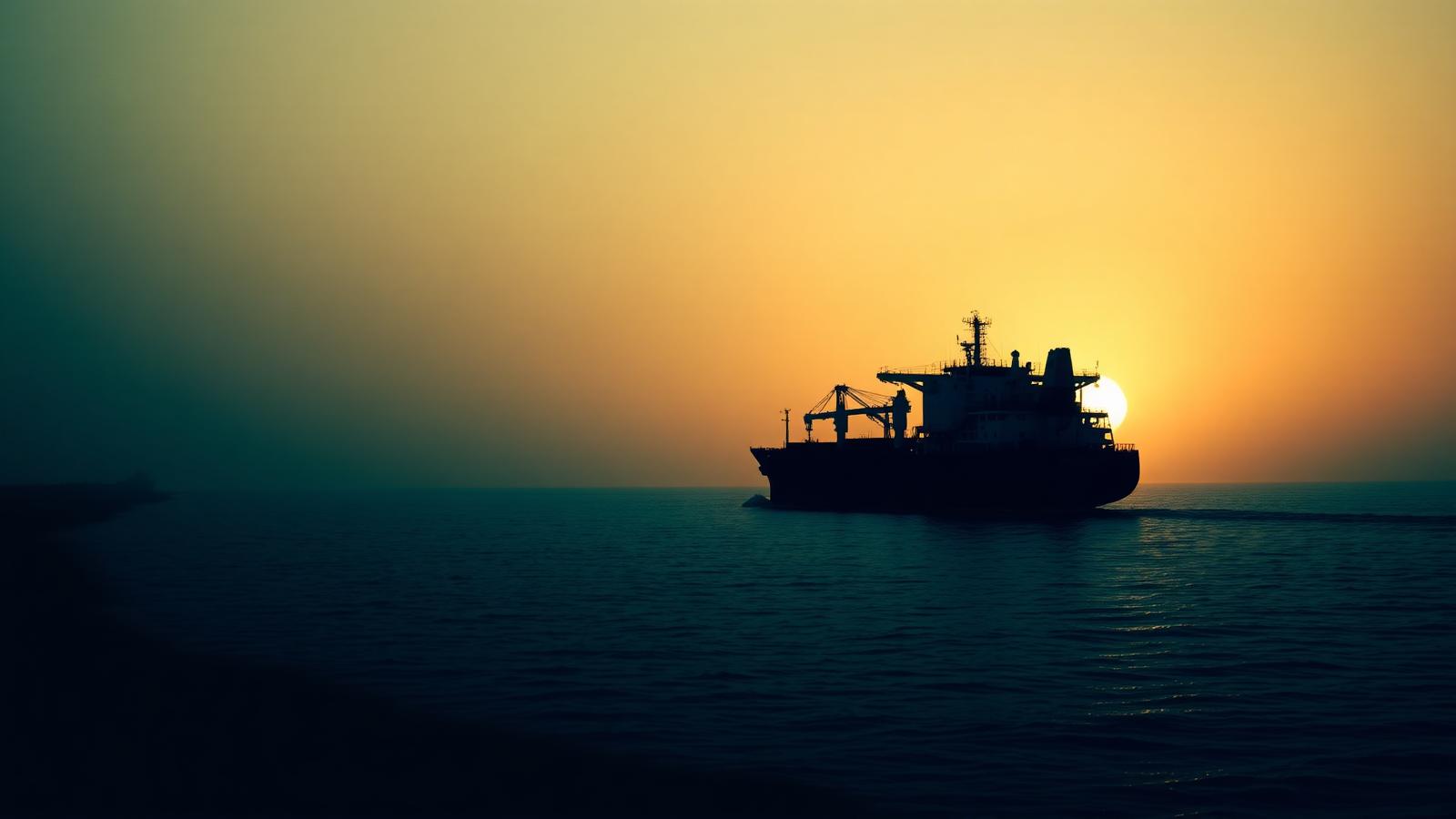
Finally, the fight is centered on a global economic chokepoint: the Strait of Hormuz. Iran’s direct threat to shipping and the US naval response have put the world’s energy supply in jeopardy, making this a truly global crisis.
Diplomatic Chessboard: Washington, Beijing, Moscow, and the Gulf States
The international reaction has been a whirlwind of high-stakes diplomacy. Washington is in a difficult position. Having been drawn in militarily, the Biden administration is now scrambling to prevent a full-scale regional war. The White House has emphasized its actions are "defensive," but the pressure to stand by its key ally, Israel, is immense. Behind the scenes, frantic calls are being made to European and Arab partners to form a diplomatic off-ramp.

Beijing and Moscow have called for an immediate ceasefire and de-escalation. Chinese diplomats, quoted in state media, have lambasted the initial Israeli strike as a reckless escalation and criticized the US for "adding fuel to the fire." Russia, bogged down in its own long-running conflict, has less bandwidth but has used its diplomatic sway at the UN to condemn the attacks on Iran. Both see the conflict as an opportunity to decry American influence in the region.
The Gulf Arab states, particularly Saudi Arabia and the UAE, are watching with extreme nervousness. While they share Israel’s enmity towards the Iranian regime, a hot war on their doorstep is a nightmare scenario. They are caught between quiet support for containing Iran and the terrifying prospect of being caught in the crossfire. News outlets in the Gulf are reflecting this tightrope walk, calling for wisdom and restraint while also blaming Iranian aggression.
Markets, Oil, and the Global Economy
The economic fallout was instantaneous. Brent crude oil prices surged over 25% in the first 48 hours of the conflict, touching $110 a barrel for the first time in years. The key fear is a sustained disruption of the Strait of Hormuz, through which nearly a fifth of the world's oil supply passes. The London-based maritime insurance market has already quoted astronomical new rates for tankers attempting the passage, with many shipping companies halting Gulf-bound voyages altogether.
This "war premium" on oil prices Iran war is already feeding into a global economy that was just finding its footing. Stock markets from New York to Tokyo have seen sharp sell-offs, particularly in the airline, manufacturing, and consumer goods sectors. Economists are now openly discussing the possibility of a global recession if the conflict drags on or widens. The 2026 Iran war is proving that a regional conflict can have immediate and painful global economic consequences.
What Experts Say Happens Next
As I listen to analysts on expert panels and read think-tank briefings, their predictions coalesce around three starkly different scenarios for what comes next.
Scenario 1: The Diplomatic Off-Ramp. In this most hopeful, if difficult, scenario, backchannel talks led by Oman or Switzerland succeed. Under intense pressure from the US and with quiet nods from China, both Iran and Israel take a step back from the brink. The agreement would be fragile, likely involving a return to the status quo ante with renewed, more intense talks on the nuclear issue. It would not be peace, but de-escalation.
Scenario 2: The Frozen Conflict. This scenario sees the current high-intensity phase burn out, but without a diplomatic resolution. Direct state-on-state attacks might cease, but the conflict would continue at a lower simmer. Expect more cyber-attacks, covert operations, and clashes at sea. The Strait of Hormuz would remain a high-risk zone, keeping oil prices punishingly high and the global economy on edge. This would create a new, unstable normal in the Middle East crisis of 2026.
Scenario 3: The Wider War. This is the nightmare. In this scenario, a miscalculation by either side—a missile going astray and causing mass civilian casualties, or the sinking of a major naval vessel—drags the entire region into the abyss. Hezbollah could open a second front on Israel’s northern border, drawing in Lebanon. Iranian-backed groups in Iraq and Syria could activate, targeting the remaining US presence there. This path leads to a catastrophic regional war with incalculable human and economic costs.
How to Follow This Responsibly
In a crisis saturated with propaganda and misinformation, media literacy is a form of self-defense. It's crucial to follow established, professional news organizations with correspondents on the ground (even if their access is limited). Triangulate your information by reading from a variety of international sources—Western, Middle Eastern, and Asian.
Be extremely skeptical of unverified videos and sensationalist claims on social media. Look for context, not just clips. Pay attention to the language used: "reports say" is different from "officials confirmed." Following a story responsibly means accepting uncertainty and resisting the urge for simple, satisfying narratives. The first casualty of war is truth, and our job as observers is to fight for the pieces of it that remain.
A Final Thought
War is always a failure of imagination. A failure to imagine the humanity of the other. As we track the movement of destroyers and debate the merits of drone defense, it’s easy to forget the irreducible core of this crisis: people. An Iranian student in Isfahan who wants to build a better future. An Israeli tech worker in Tel Aviv who wants to raise their children in peace. A young American sailor in the Persian Gulf who just wants to go home. Their hopes and fears are the same. The tragedy is that they are trapped in a geopolitical conflict so much larger than themselves, their futures held hostage by decisions made in fortified rooms far away. The only sane hope is that, somehow, the view from those rooms can be widened to see the human faces in the balance.
Sources
- Reuters - reuters.com
- Associated Press - apnews.com
- BBC News - bbc.com/news
- Al Jazeera - aljazeera.com
- The New York Times - nytimes.com
- The Financial Times - ft.com
- The Guardian - theguardian.com
Hashtags
#IranWar #MiddleEastCrisis #Geopolitics #IranIsraelWar #USIran #WarIn2026 #StraitOfHormuz '''
Keep reading

F1 2026: New Rules, New Cars, and Who Will Win the Championship
F1 2026 isn't just an update; it's a revolution. With radical new cars, 50/50 power units, and active aero, the grid is set for its biggest shake-up since 2014. Who will master the chaos and claim the crown?
Brink of Chaos: USA, Iran, Israel Stare Into the Abyss (June 2026)
The 'shadow war' is over. Overt missile strikes between Iran and Israel have pushed the Middle East to the brink. With the US on high alert, we analyze the path to war and the desperate search for a ceasefire in June 2026.

AI GLM 5.2 That Beats Claude Fable 5: A New Era of LLM Dominance
GLM 5.2 has arrived, and it's officially outperforming Claude Fable 5 in coding, math, and long-context retrieval. Explore the technical breakthroughs behind Zhipu AI's new powerhouse.